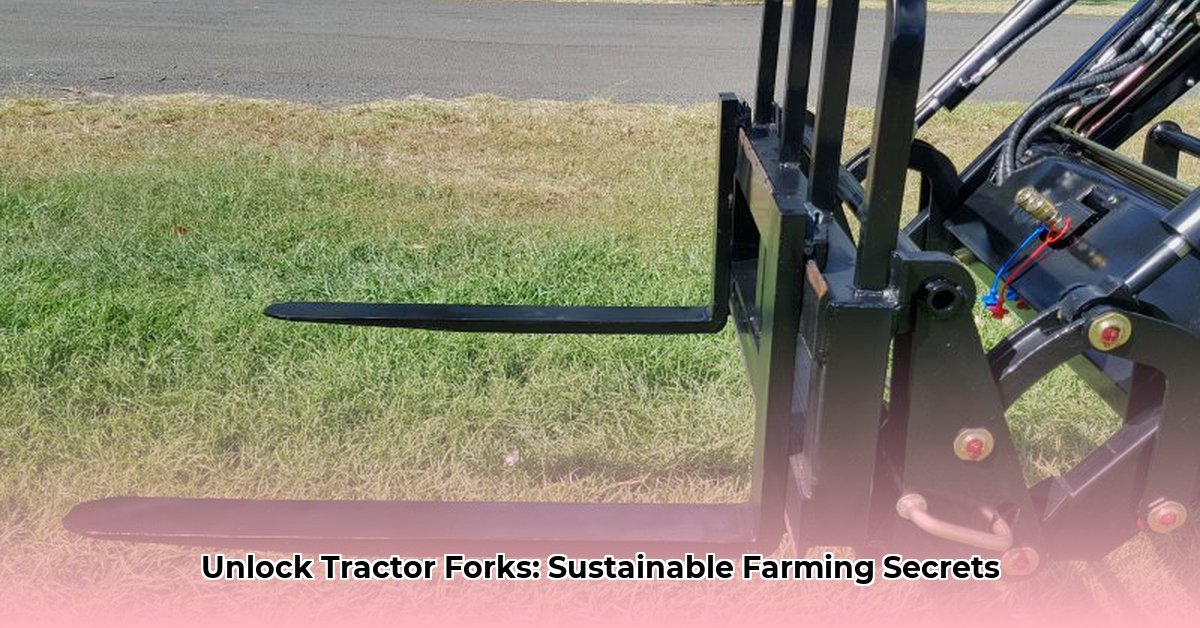
Choosing the right equipment is paramount for efficient and sustainable farming. Tractor forks, readily available at Tractor Supply, significantly enhance both efficiency and environmental responsibility. For more information on tractor attachments, check out this helpful resource: Farm Tractor Attachments. This guide provides a comprehensive understanding of selecting, using, and maintaining tractor forks to optimize your sustainable farming practices.
Types of Tractor Forks at Tractor Supply: A Detailed Overview
Tractor Supply offers various forks tailored to specific farming tasks. Understanding these differences is vital for maximizing efficiency and minimizing environmental impact.
Pallet Forks: Ideal for moving pallets of feed, supplies, or even finished goods. Their wide tine spacing facilitates handling larger loads. These are versatile and essential for efficient material handling.
Bale Forks: Specifically designed for handling large hay, straw, and other bales. The closer tine spacing ensures a secure grip, minimizing bale damage and reducing waste. This contributes to efficient forage management.
Manure Forks: Crucial for effective manure management. The wider tine spacing enables even distribution, enhancing soil fertility and reducing reliance on chemical fertilizers. This promotes environmentally friendly fertilization.
| Fork Type | Best Use | Key Considerations | Sustainable Benefits |
|---|---|---|---|
| Pallet Forks | Moving pallets, crates, and other flat loads | Weight capacity, tine width, tractor compatibility | Reduced fuel consumption, efficient material movement |
| Bale Forks | Handling large round or square bales | Bale size and weight, tine spacing, secure gripping | Minimized bale damage, reduced waste, efficient forage handling |
| Manure Forks | Even manure spreading across fields | Tine spacing for even distribution, weight capacity for heavy loads | Improved soil fertility, reduced reliance on chemical fertilizers |
Choosing the Right Tractor Forks: A Decision-Making Framework
Selecting suitable forks hinges on your farm's unique characteristics. Consider these factors:
Farm Size: Smaller farms benefit from lighter-duty forks, while larger operations may necessitate heavier-duty models with higher weight capacities. This ensures optimal efficiency relative to scale.
Crop Types: The types of crops grown directly influence fork selection. Hay requires bale forks, while material handling benefits from pallet forks. Matching the tool to the task is crucial.
Soil Conditions: Heavier soils might require more robust forks to prevent damage and ensure ease of use. Stronger tines are needed to penetrate compacted ground. Proper soil engagement is key.
Weight Capacity: Always choose forks with a weight capacity exceeding the heaviest anticipated load for safety reasons. Overloading is a major safety hazard.
Safe Operation and Maintenance: Prioritizing Safety and Longevity
Safe operation is paramount. Before each use:
Thorough Inspection: Inspect for damage, cracks, or wear. Check hydraulics and mounting mechanisms for leaks or issues. Regular maintenance is essential for safety and longevity.
Secure Attachment: Properly attach the forks to your tractor's three-point hitch, ensuring a secure connection. Double-check all pins and latches.
Gentle Lifting and Lowering: Lift and lower loads slowly and steadily, avoiding sudden movements.
Careful Transport: Drive slowly and carefully, being mindful of obstacles.
Proper Storage: After use, detach and store forks in a designated, protected area.
Regular maintenance includes cleaning debris, lubricating moving parts, and checking for wear. Proactive maintenance extends the lifespan of your equipment.
Sustainable Applications: Maximizing Environmental Benefits
Tractor forks directly contribute to sustainable farming practices:
Efficient Manure Management: Even manure spreading improves soil health, reducing the need for synthetic fertilizers. This minimizes environmental impact and fosters nutrient cycling.
Reduced Crop Damage: Careful bale handling minimizes crop losses during transport and storage. This contributes to reduced waste and enhanced resource efficiency.
Improved Composting: Turning compost piles aerates them, speeding up decomposition and creating richer compost. This enhances soil health and reduces the composting time.
Comparing Tractor Forks to Alternatives: Efficiency and Environmental Impact
Tractor forks provide significant advantages over manual labor, offering increased speed, safety, and efficiency in moving heavy loads. While other methods exist, tractor forks often deliver superior outcomes in terms of efficiency and sustainability.
Conclusion: Investing in Sustainable Farming Practices
Investing in quality tractor forks from Tractor Supply is a strategic decision that improves long-term farm sustainability and efficiency. The increased productivity, reduced waste, and minimized environmental impact significantly outweigh the initial cost, making it a cost-effective and environmentally responsible investment.